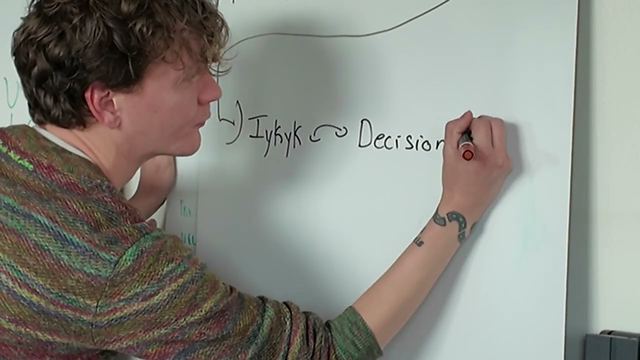
“Cuba is last in line”: a conversation in Denver.
In this video? Ask for a change or have it taken down.
Answers What do you think of the United States? · see how other cities answered →
A Cuban man in Denver explains, in Spanish, why he puts his country last in the line of nations, what the peso has done, and why nobody in Cuba can take home the bread they bake. Filmed on a walk, with a few English asides from behind the camera.
He starts by defining his terms. To overcome, superar, is failing an exam and passing it later, or China rising. Then he sets up the image the whole conversation hangs on: countries as people queueing to buy something, and the one at the front the furthest ahead. “el último de atrás cuba.” Asked how that looks, he does not soften it: the world evolves, and Cuba evolves backwards, towards “la era del hacha de piedra.”
What Cuba needs first, he says, is to get out from under its government. “Ese gobierno es un obstáculo para todos.” Has anyone overcome it? “No se ha superado.”
The economics come in numbers he carries in his head. A dollar used to cost about 25 Cuban pesos; now, he says, “470 por 1,” and the state has nothing to set against it. Then the sharpest passage, on ownership. In Cuba the factories belonged to the state, and the worker always took something home: bread if he baked bread, sweets if he made sweets. Here, “te pagan por hacer los dulces, pero no te puedes llevar los dulces. ¿Sabes por qué? Porque eso tiene dueño.” And in Cuba, “como ya no tiene dueño, todo el mundo se lo lleva.”
The last point is about time. In Cuba you leave work to queue for food that runs out; here you pass a supermarket on the way home and buy what you want. His name is Romani.
Filmed by Maceo in Denver. The transcript below is his own words in Spanish rather than a translation.
15 supporters at $162 a month pay for this work, on the way to $1,000 a month. Become a supporter →