Carol on deaf rights, and her family taking on Hollywood’s ADA exemption.
In this video? Ask for a change or have it taken down.
Hollywood wrote itself an exemption from the Americans with Disabilities Act. It took Carol and the people she organised roughly seven years, on paper petitions, with no internet, to make captioned screenings of every blockbuster a normal thing. This is her telling of it, and then what she is working on now.
She sets the scale first: at the time, she says, the film industry was the third largest in the country, behind oil and automobiles. And it had arranged not to be covered. “You couldn’t go to a damn American movie.”
The campaign ran from the late 1980s. “No such thing as the internet. No such thing as social media. Hash what?” When the theatres finally complied they complied minimally, scheduling captioned showings “at maybe ten at night on a Tuesday, or eleven in the morning on a Thursday.” That was the second fight. “Once we started the fight, we didn’t accept anything less than normal”: a weekend evening, dinner and a film, a Sunday with your family.
The part she is proudest of is not the outcome. It is who she got in the room. She brought together organisations that had never spoken to each other in their history, hard of hearing against deaf, by refusing to let the difference be the subject. “It didn’t matter how much dependency of sign language or spoken language. What mattered was communication access.”
Her explanation of open captions is the clearest on this site, and it is about more than dialogue: every sound rendered visible, “doors banging, or Jurassic Park dinosaurs coming in,” which is what separates it from subtitles.
And the argument she uses on anyone who calls it a small thing: “Why did Hollywood fight so hard not to become accessible if it was only rough? If you take movies away from the hearing world globally, we would have a real revolution in this country.”
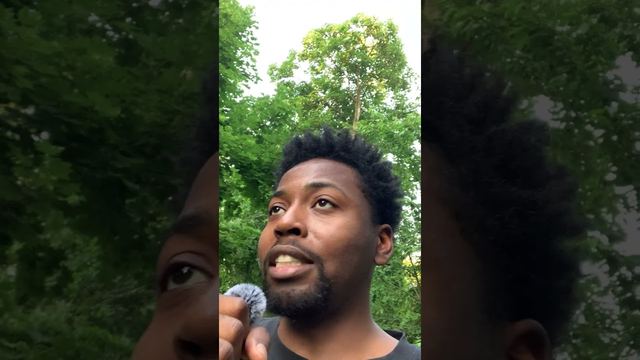
The middle of the tape turns into something else. She asks the twenty-six-year-old holding the camera about his passion, tells him it can change and evolve but that knowing it is the gift, and when he asks whether she is his mentor she declines the title and offers friendship instead. Her advice on being noticed: you cannot plan it, and your job is to do what you do.
She also tells a story about an AI turning up in her own video and commenting on it, and her immediate reaction is the tell. She cannot publish it until she has a transcript, because she does not send out anything that is not accessible. Which leads to her verdict on the auto-generated captions this entire archive is built from: “We call them crapions because they’re crappy.”
She closes on her two films. One is Out of the Shadows, on deaf America then and now. The other exposes audism, and she connects language deprivation directly to the laws that punished anyone who taught a slave to read, arguing that deaf children have been kept from literacy and therefore from their own families. By her figures, ninety per cent of deaf children are born to hearing parents and eighty-five per cent of those parents refuse to sign. The figure she wants reassessed is Alexander Graham Bell, held up as a hero for the telephone, and a eugenicist.
15 supporters at $162 a month pay for this work, on the way to $1,000 a month. Become a supporter →